The evolution of ProPILOT - Part 2
In pursuit of the ultimate seamless driving experience
- Brand & Products


From simulation to real-world testing
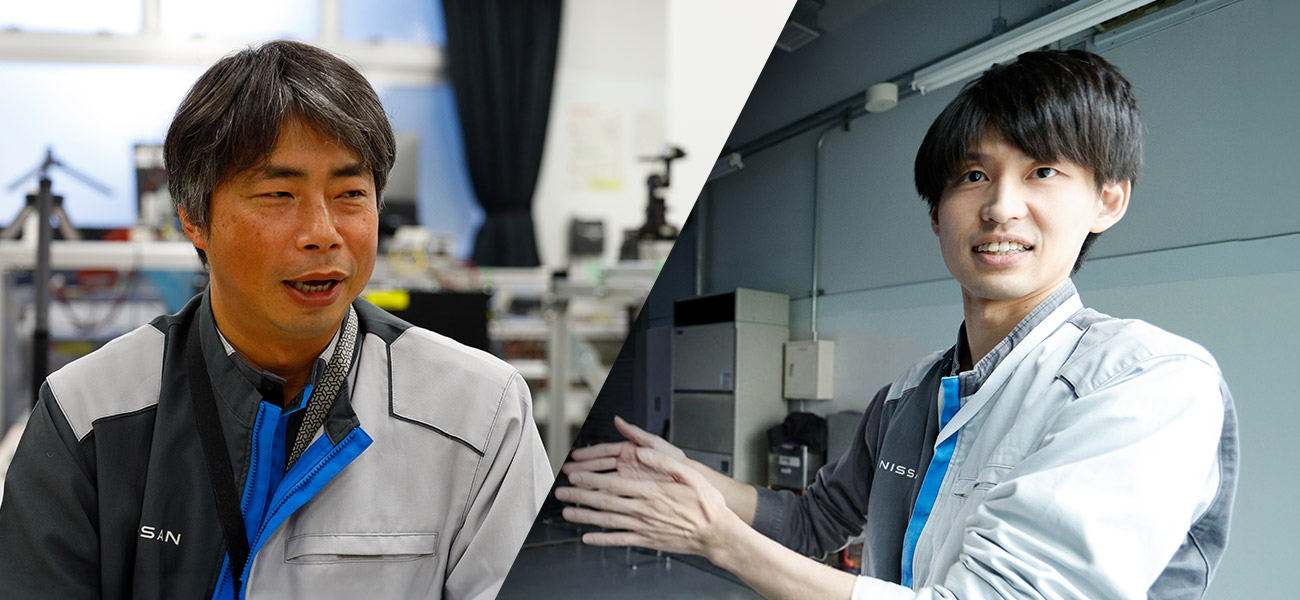
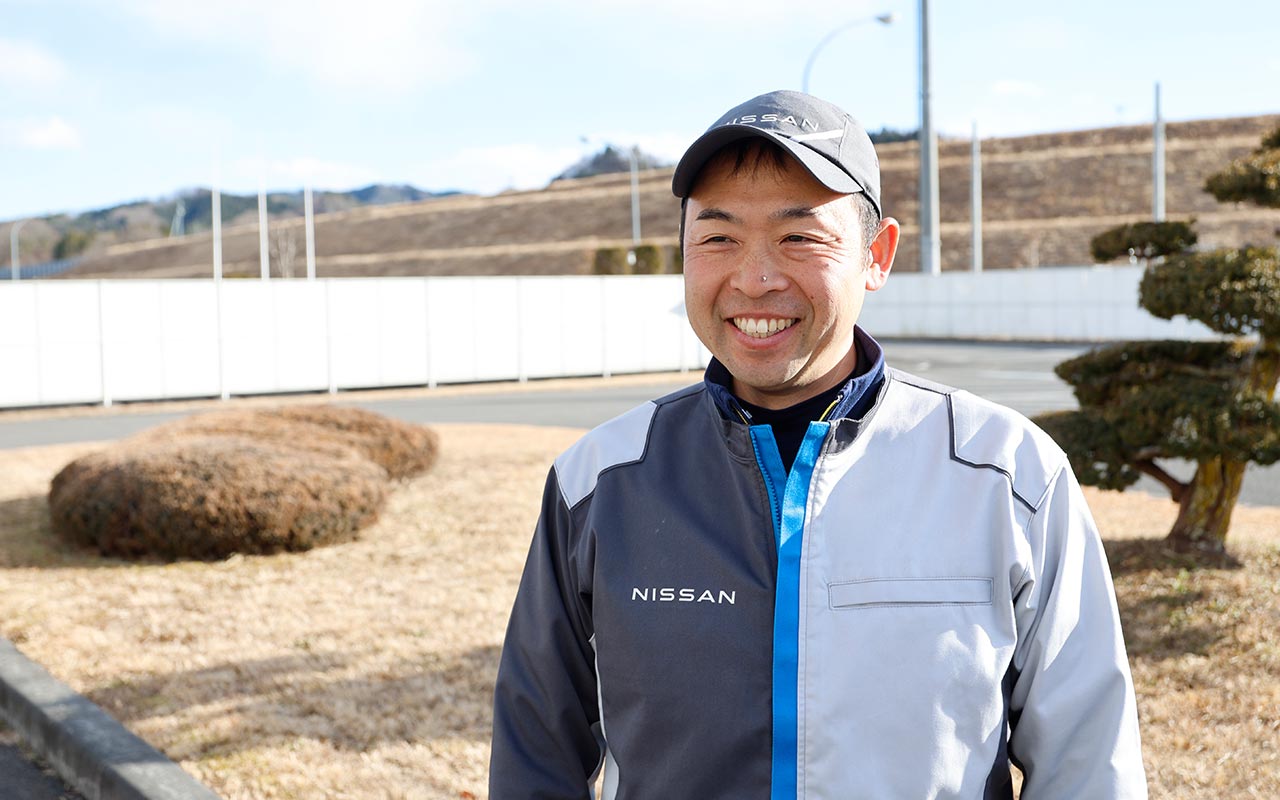
Nissan's advanced driver-assistance technology, ProPILOT, is first validated through HILS (hardware-in-the-loop simulation) to confirm that the system functions correctly in a laboratory setting. Once validated, ProPILOT is installed in vehicles for testing in real-world conditions. Ryuji Hashimoto and his team in the AD/ADAS Performance Testing Group lead this work, continually striving to meet the highest safety standards. Their ultimate goal is to deliver a seamless driving experience.
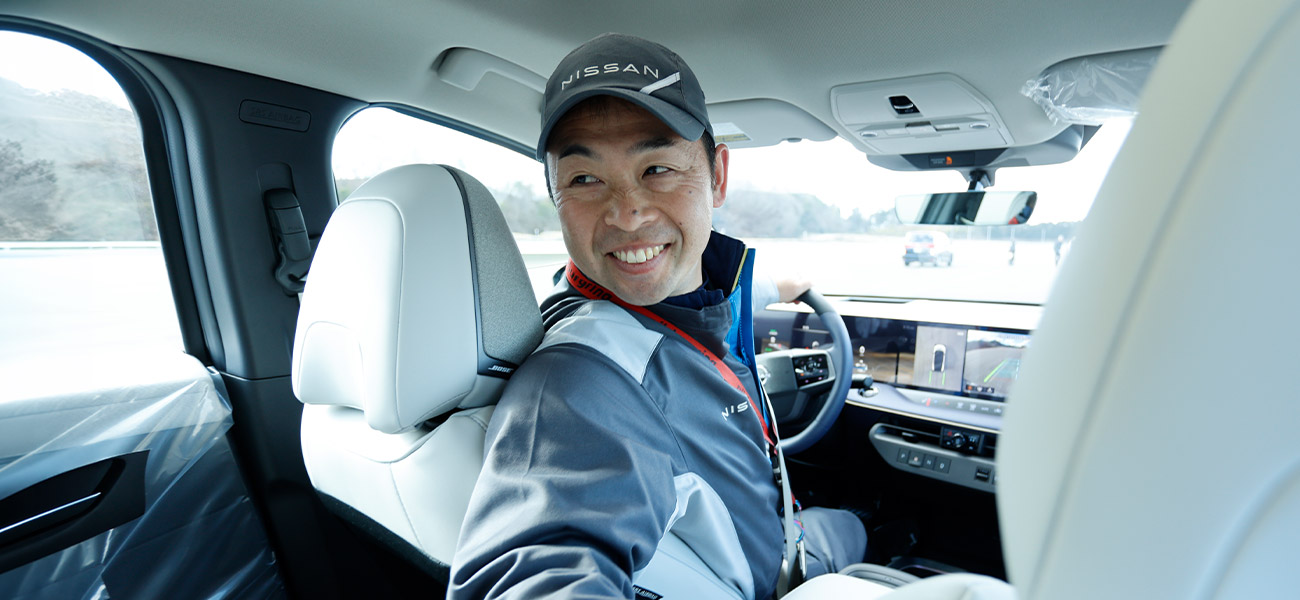
They have driven countless miles on highways and are always pushing the boundaries on how they can improve this technology. Now, experiments are underway at the new AD/ADAS testing facility at the Motegi Proving Ground in Tochigi Prefecture. They are studying how the system reacts to sudden movements by pedestrians, cyclists and cars. All these efforts have a single goal: to deliver unwavering safety to customers.
For a behind-the-scenes look at the challenges at HILS, click here.
Growing with vehicle dynamics: The craftsman's roots
When Hashimoto joined Nissan in 2005, he began his career in vehicle handling stability, a core element of the driving experience. For eight years, he worked on the development of the Patrol, Titan and Murano. During that time, he also honed his skills as a professional evaluation driver.
Later, he shifted to advanced development of ride comfort. His aim: a smooth ride that minimizes unpleasant vibrations. He set out to answer a simple question: "What is the ideal ride comfort?" The ability to understand human sensitivities that he cultivated during this time became his greatest asset in autonomous driving development.
Hashimoto then spent five years advancing electric braking systems. In e-POWER and electric vehicles, electric motors provide braking assistance without relying on engine vacuum. Now used in models such as the Ariya and Note, this work broadened his expertise across vehicle dynamics—from handling and ride comfort to brake control—and established him as a trusted engineer and skilled evaluation driver.
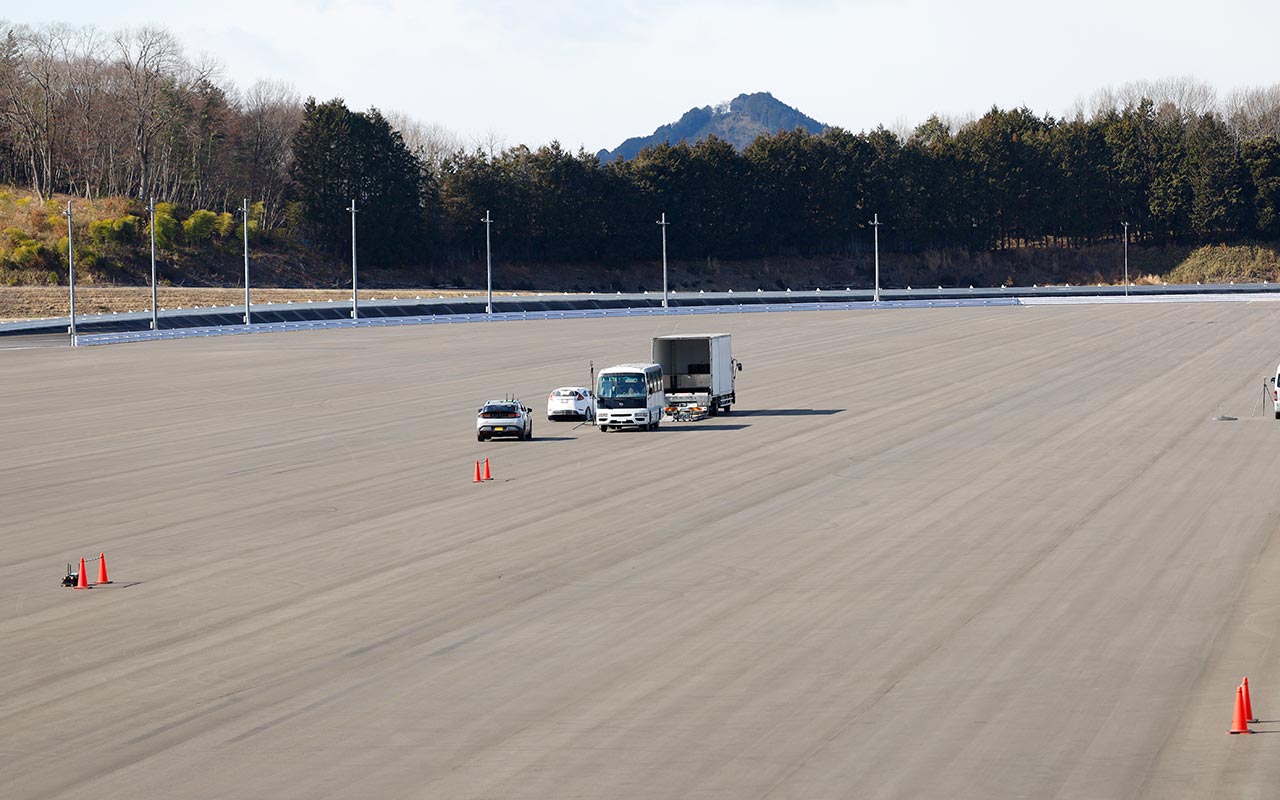
The AD/ADAS facility, completed in December 2025 at the Motegi Proving Ground, is a 300-by-600-meter site where tests verify vehicle responses to sudden obstacles and lane-keeping accuracy.
Driving along the Shuto Expressway over and over: The dawn of ProPILOT
In 2015, Hashimoto was dispatched to the forefront of Autonomous Driving (AD) development. His mission: complete development of Lane Keep Assist (LKA) for ProPILOT. The testing ground was Tokyo's most challenging highway: the Shuto Expressway. Hashimoto says, "We drove relentlessly, refining the system repeatedly. It was a true team effort encompassing sheer volume."
They left Tochigi on Mondays, drove the expressway all day, stayed overnight in Tokyo, and resumed testing the next morning. Whether it was rain or shine, for eight hours a day, they looped through traffic jams and quiet late-night roads.
During the testing, drivers subconsciously anticipated several moves ahead. But at that time, the control relied mainly on feedback systems, causing jerky movements. The tight curves and merges of the Inner Circular Route of Tokyo Metropolitan Expressway (C1) were especially difficult to manage. "Just steering along the road—that simple act—was a huge challenge for the control system technology of the time" says Hashimoto.
Limitations of camera recognition and the fear of approaching walls or diverging paths caused real anxiety. To refine the system, Hashimoto started thinking like the machine, constantly evaluating where the system could falter and where humans felt fear based on human sensibilities. He says, "It wasn't just about staying in the middle of the road. Skilled drivers would know how and when to steer. We had to program that skill into a machine with the same nuances and timing." They repeatedly reprogrammed the software and tested it on the road until they were confident of a safe outcome.
They returned to Tochigi on Fridays, rested on the weekends, then drove back to Tokyo on Mondays. Through this intense effort, Nissan's unique Lane Keep Assist system was born — trusted, safe and reassuring.
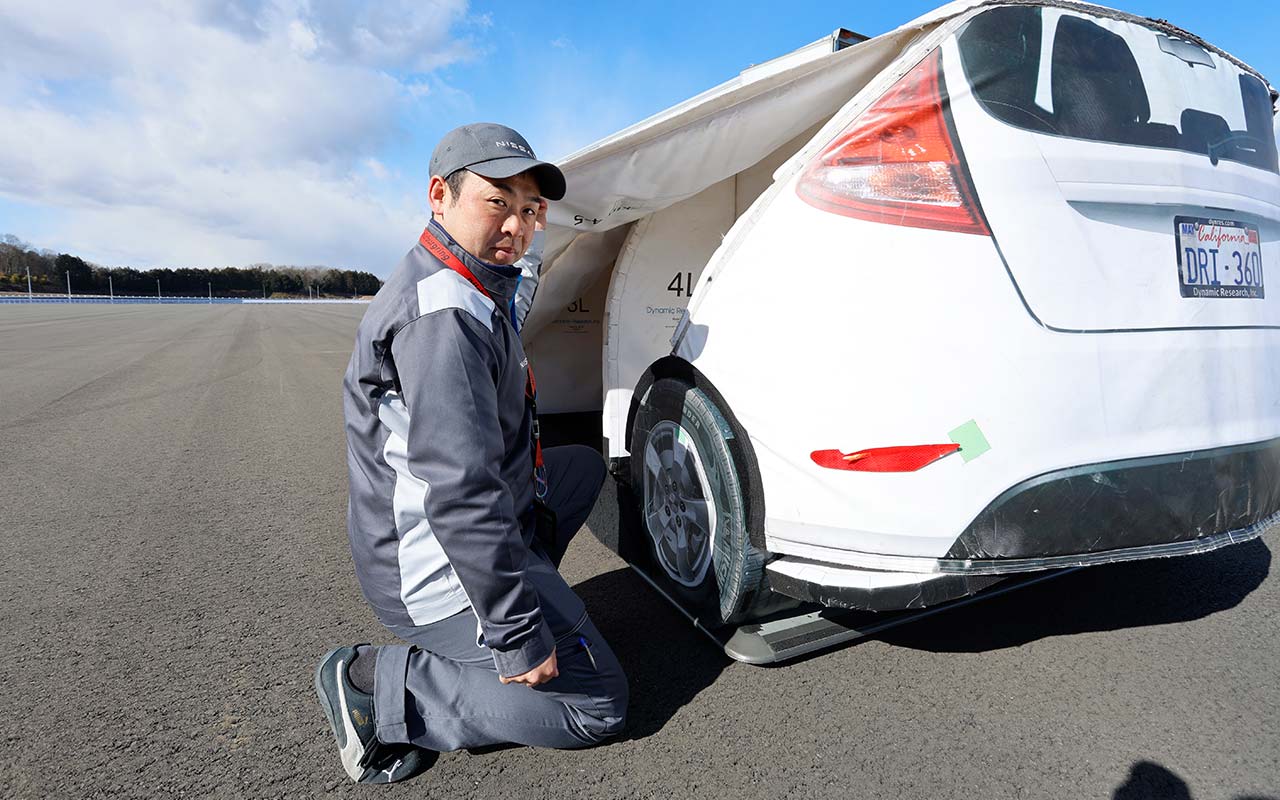
A model car can be remotely controlled and driven autonomously. Even if it crashed, it could be quickly repaired.
The leap to 2.0: Exploring highway junctions across Japan
In 2019, the next challenge was the development of ProPILOT 2.0's hands-off highway driving. This required not only cameras but also HD (High Density) maps that were accurate within centimeters.
At the time, relying solely on map providers wasn't enough. Hashimoto and his team drove test vehicles equipped with measurement devices across Japan collecting data at highway junctions. "A single junction offers eight possible routes when combining both the inbound and outbound directions. To collect data comprehensively, we drove to each and every one of them," says Hashimoto.
From Sendai to Osaka and Kobe, they spent a week navigating complex network of highway junctions. They gathered data, verified the control system accuracy and adjust the software on site when needed. This meticulous effort laid the foundation for the first-ever system to enable hands-off driving* while cruising in a single lane.
- Hands-off driving is possible when driving in a single lane, on the condition that the driver remains attentive on the road ahead and is prepared to immediately take manual control of the steering wheel when conditions of the road, traffic or vehicle requires it.
The craftsman commitment: From the Skyline to Nissan Ariya and Elgrand
Skyline, which was the first model to feature ProPILOT 2.0; the goal was to achieve the precise rail-like stability of a high-speed train. As technology advanced through the Ariya and the recently launched all-new Elgrand, the focus shifted toward making driving feel more natural and human.
Hashimoto envisioned a system that intervenes subtly only when needed, while preserving the driver's sense of control and making every movement feel natural.
Hashimoto and his team repeatedly tested all-new Elgrand on Tochigi's oval track and at Hokkaido test courses to envision a future in which drivers can finish a journey thinking, "Driving was surprisingly easy today."
Having been with Nissan for 19 years, Hashimoto's core belief remains intact:
"Deploy technology to reduce the stress associated with driving, make driving more enjoyable, expand the range of locations where our vehicles can go and enrich customers' lives." He isn't particularly concerned with what competitors are doing, what matters most is delivering something they truly believe in — something that feels right. At his home overlooking Hachiman-yama in Utsunomiya, the question of an 'ideal driving experience' is always in his mind.
Their extensive testing on Tokyo's highways and across Japan's junctions is shaping a future of greater freedom and enhanced comfort, providing Nissan customers with a seamless driving experience.
Subscribe to Nissan Stories
Sign up to receive the latest Nissan stories!