The evolution of ProPILOT - Part 1
Pursuing safety through relentless virtual testing
- Brand & Products


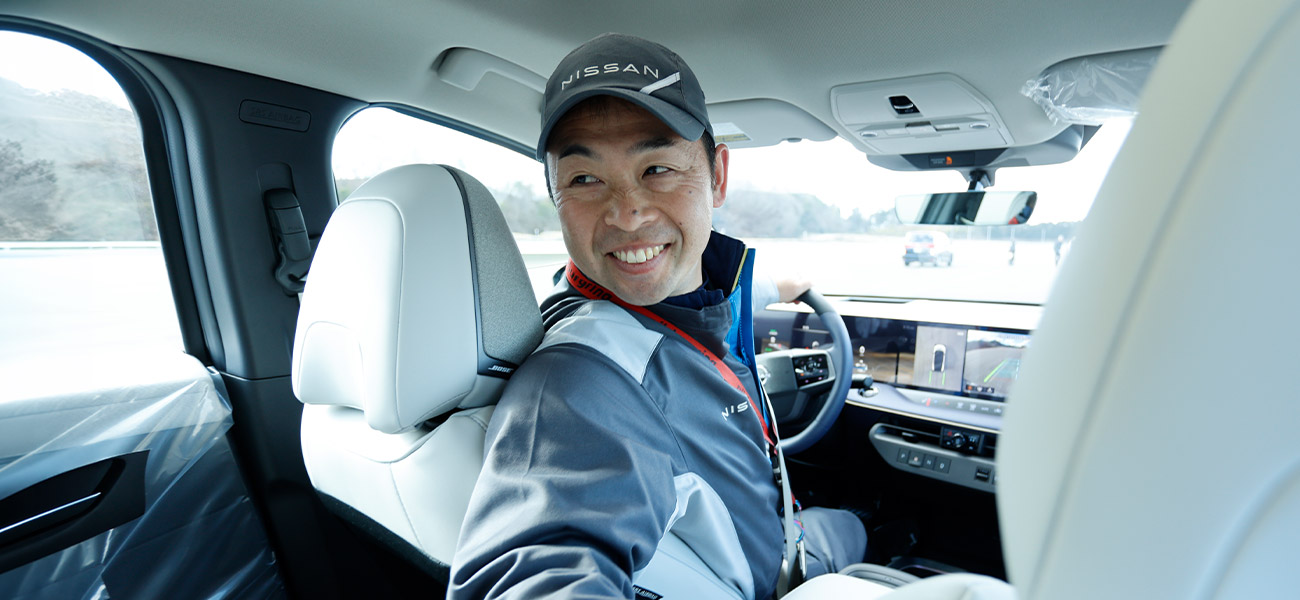
The forefront of automotive safety isn't limited to blazing-fast test tracks or snow-covered mountain roads. Sometimes it's developed inside quiet and dimly lit laboratories. In there, computers operate silently, supporting ProPILOT, Nissan's advanced driver-assistance system. We discover that, behind the scenes, engineers are relentlessly pushing themselves to achieve greater advancements.
The evolution of ProPILOT is a two-part series.
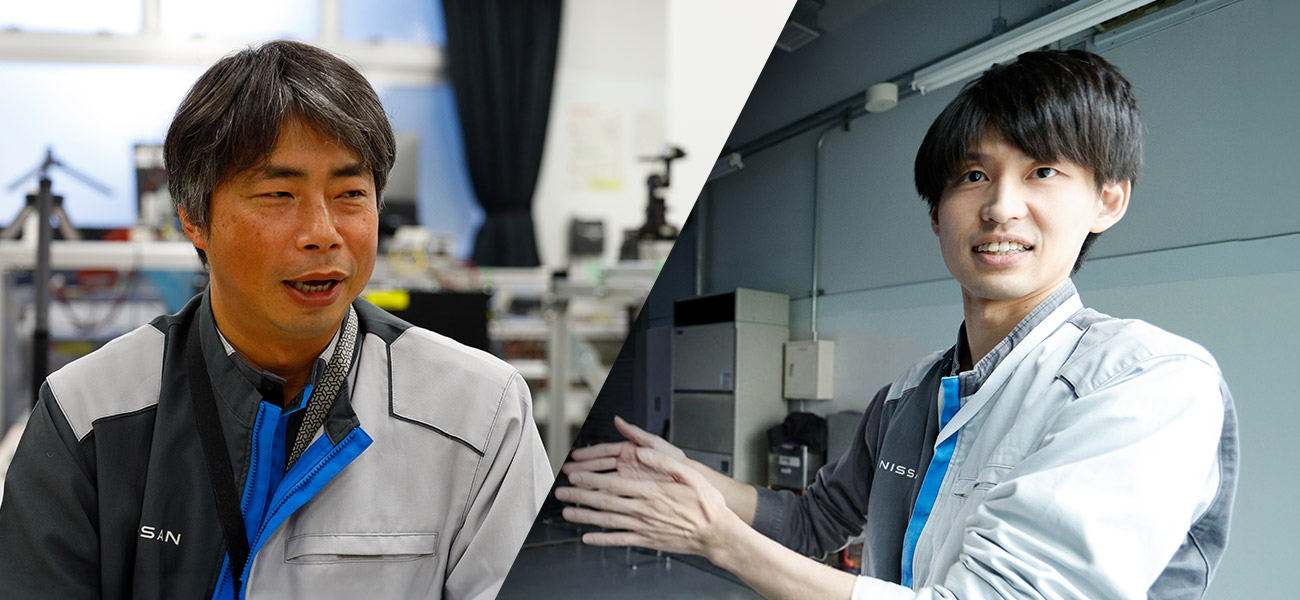
First, we present the story of Imai and Yamada as they verify that the 'ProPILOT' system is functioning correctly by leveraging virtual testing.
Click here for Part 2, which covers performance evaluations using an actual vehicle.
Two decades of development
More than two decades ago, Koji Imai — team leader of the AD/ADAS & Vehicle Performance Testing Technology Development Group was at the forefront of automotive safety. He pursued cutting-edge vehicle control even when autonomous driving was still considered a technology of the future. When he first joined the department as a new employee fresh out of university, he worked with fundamental technologies for controlling vehicle behavior, such as the antilock braking system (ABS) and vehicle dynamics control (VDC).
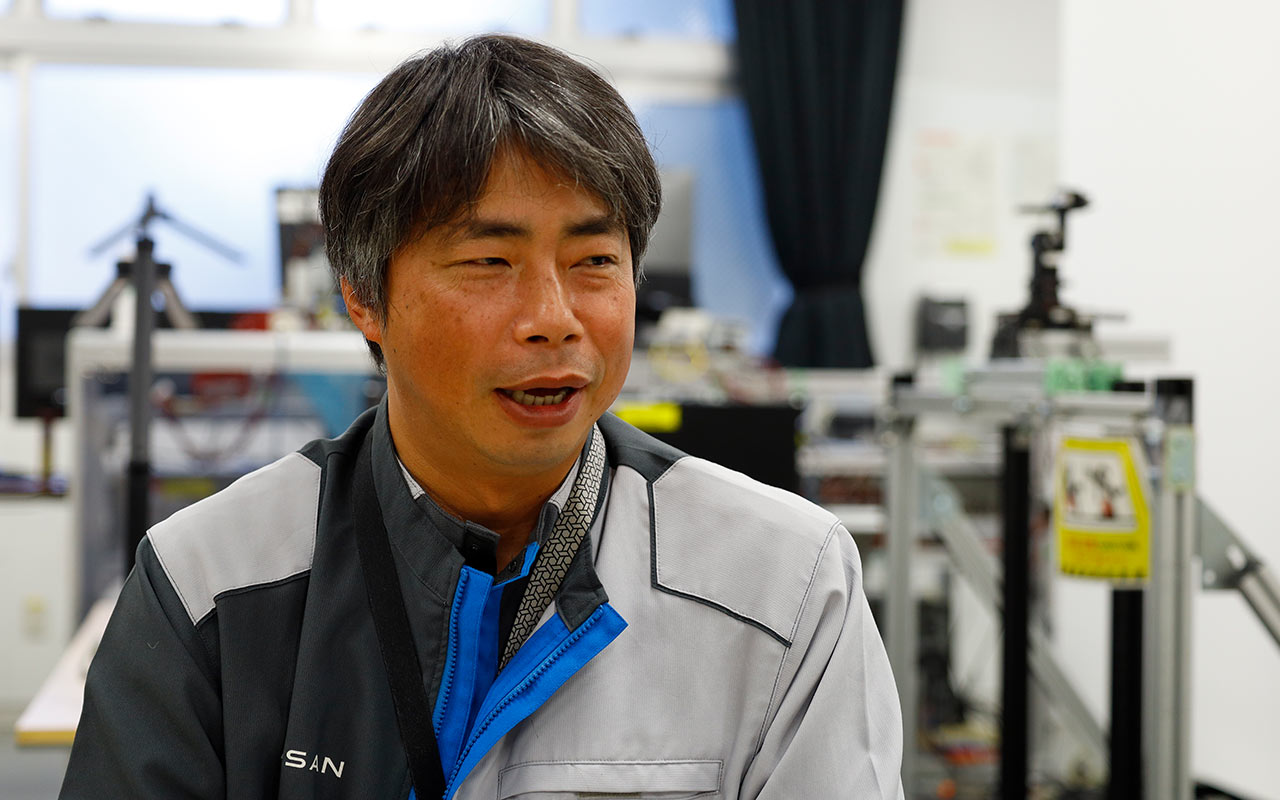
"At the time, we were developing technology to control the torque delivery aimed at preventing spin outs," Imai recalls.
In 2016, Nissan launched the Serena with the first generation, ProPILOT 1.0. Imai and his team dedicated themselves to establishing HILS (hardware in the loop simulation), a technology that allowed system evaluation without using actual vehicles. They moved from simple tracking systems to complex intelligent systems with multiple components working together. Behind this evolution was an enormous effort to evaluate countless scenarios.
The 2,300-test challenge
Yusuke Yamada is one of the team's rising talents and is currently spearheading the continued development of ProPILOT 2.0. This system uses high-precision maps, GPS, 360-degree cameras and radar to enable hands-off driving (single lane) on highways. The evolution from ProPILOT to ProPILOT 2.0 dramatically increased evaluation complexity. ProPILOT involved about 1,000 test items where as ProPILOT 2.0 involves a substantial increase to about 2,300 test items.
Some scenarios were deemed impossible—or too dangerous—to recreate on public roads, such as sudden braking, abrupt cut-ins, driver drowsiness and component failures. So, they built these scenarios inside a virtual world using HILS. The system underwent the 2,300 trials in simulation, helping the team ensure its robustness.
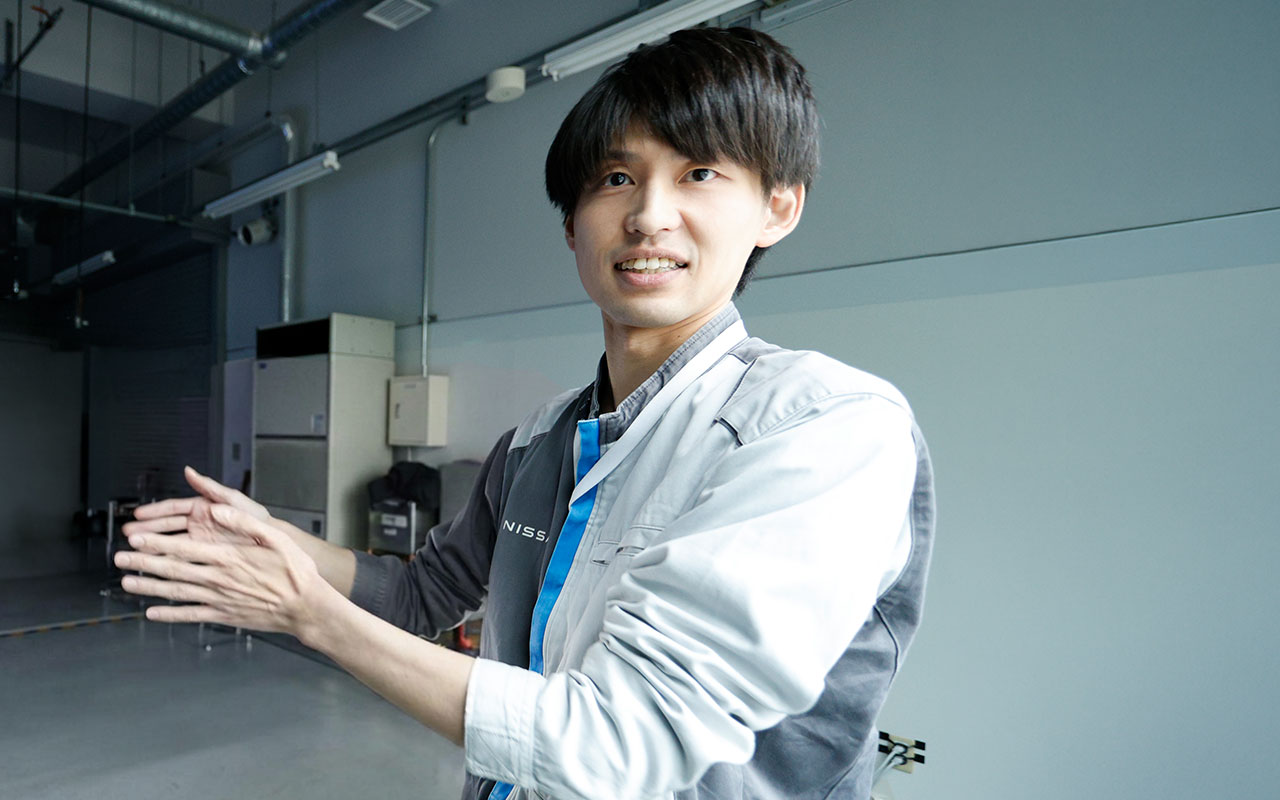
Yamada says, "Testing all 2,300 scenarios on real roads would take years, not months."
The evolution of next generation ProPILOT
In FY2027, Nissan plans to introduce the next-generation ProPILOT, and this is giving the team no time to rest. This system will not rely on high-precision maps; instead, AI will recognize surroundings independently and navigate complex, everyday roads.
It's an entirely new realm of evolution. Imai and Yamada agree, "We need to fundamentally rethink our logic based on perception, judgment and operation." They wonder what AI will think and how it will act. Yamada says, "Honestly, I feel some anxiety, but I'm also excited about this new challenge as this is uncharted territory for us." They are now working to build a new standard for evaluating AI's behavior in a world without maps.
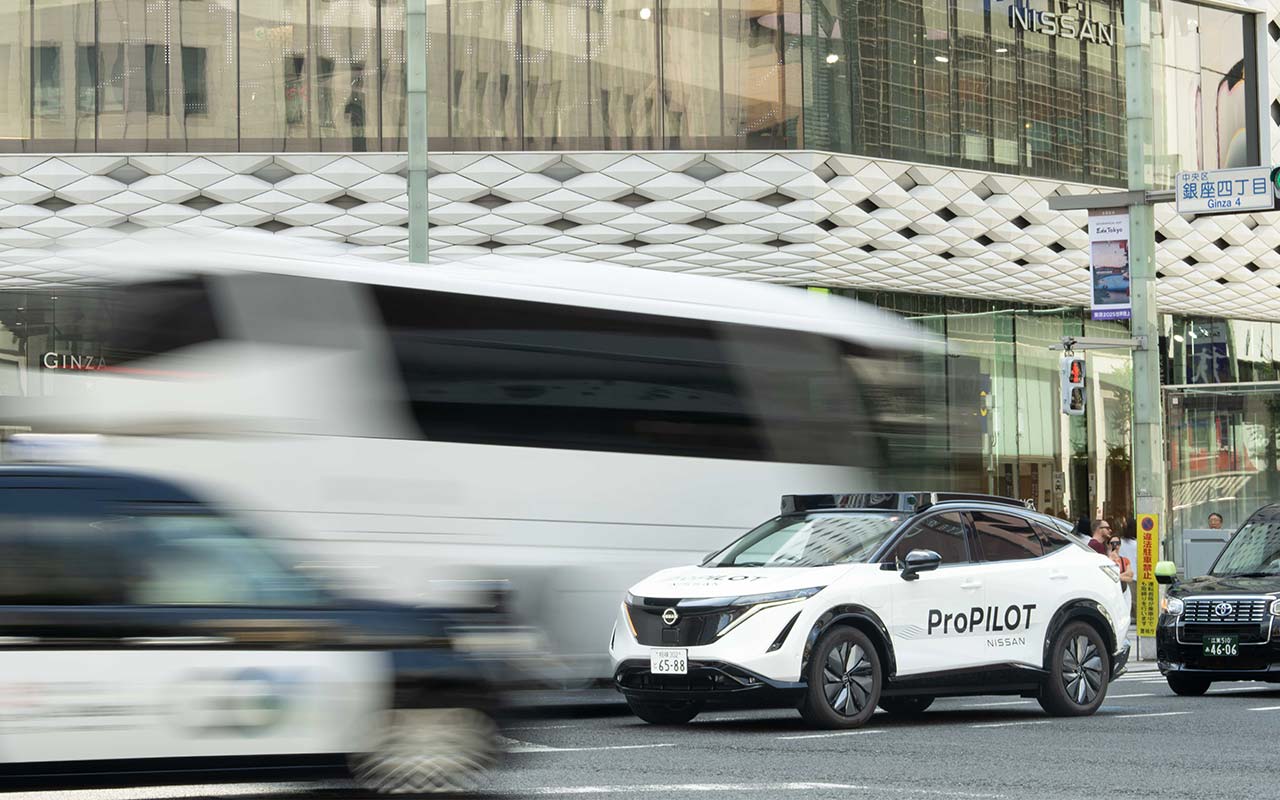
A prototype of the next generation 'ProPILOT' speeding through the streets of Ginza, Tokyo. A demonstration was held in September 2025.
The ultimate goal
No matter how much technology advances or how evaluation tools evolve, Imai and his team never lose sight of the most important aspect: the customer.
"Our ultimate goal is to deliver a safe, reliable car that feels natural in any situation."
In the lab, gazing at monitors, the engineers carry forward the relentless passion for safety inherited from the era of ABS. Until ProPILOT turns the next corner and reveals a new approach, our engineers will never stop striving for the next stage of perfection.
With the functional testing of ProPILOT now complete under the rigorous scrutiny of Imai and Yamada, the system is finally moving to the test track to begin on-road testing.
Stay tuned for the continuation in Part 2.
Subscribe to Nissan Stories
Sign up to receive the latest Nissan stories!