

e-Powertrain Control Technology


A 100% electric motor drive delivers precise, dynamic performance, ensuring exceptionally smooth acceleration and deceleration
Nissan's EVs and e-POWER vehicles have been developed with a focus on delivering responsive performance by controlling acceleration at the speed of electrical signals.
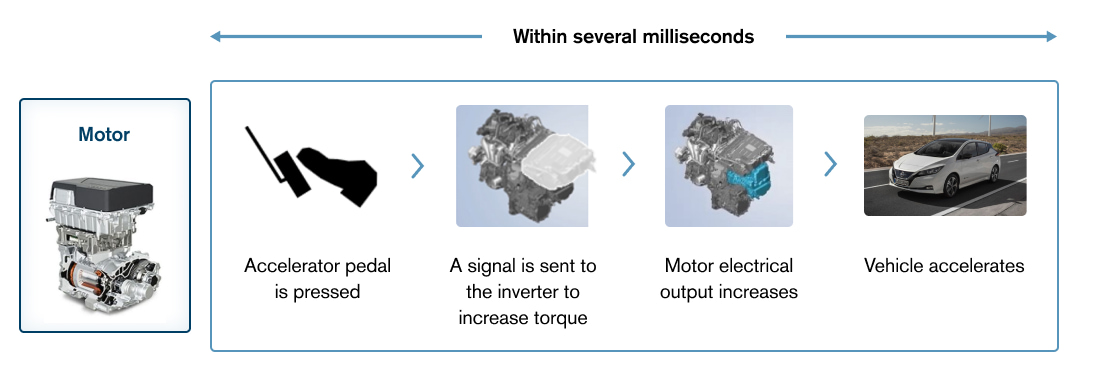
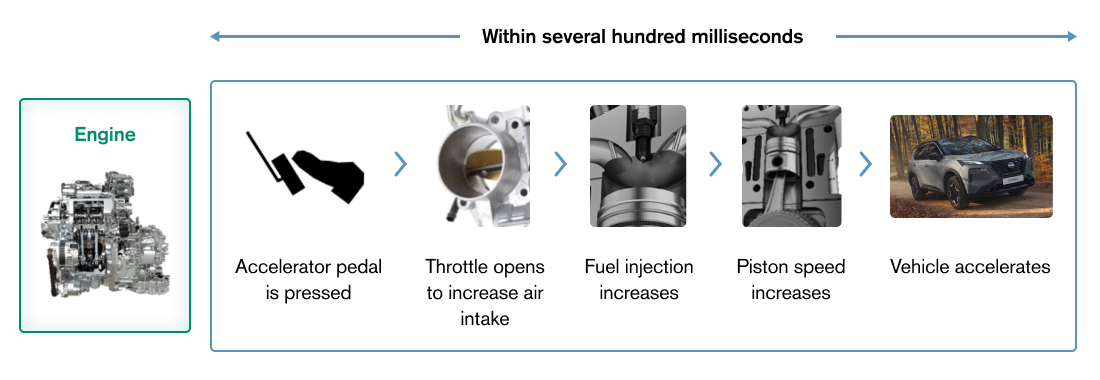
In gasoline-powered vehicles, acceleration response is constrained by airflow and mechanical processes. Electric motors, by contrast, respond directly to electrical signals, enabling exceptionally quick acceleration response and delivering smooth, refined performance.
Motor: When the accelerator pedal is pressed, the motor sends a signal to the inverter to increase torque. The inverter then increases the current supplied to the motor, accelerating the vehicle.
Engine: When the accelerator pedal is pressed, the engine opens the throttle to increase air intake, injects fuel and raises piston speed, accelerating the vehicle.
Technology functionality
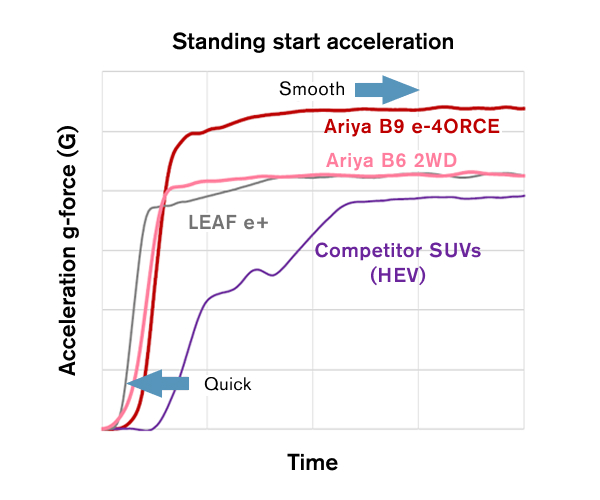
Nissan's proprietary motor control technology delivers responsive, smooth performance that closely follows the driver’s accelerator input, combining precise vehicle control with a refined driving experience.
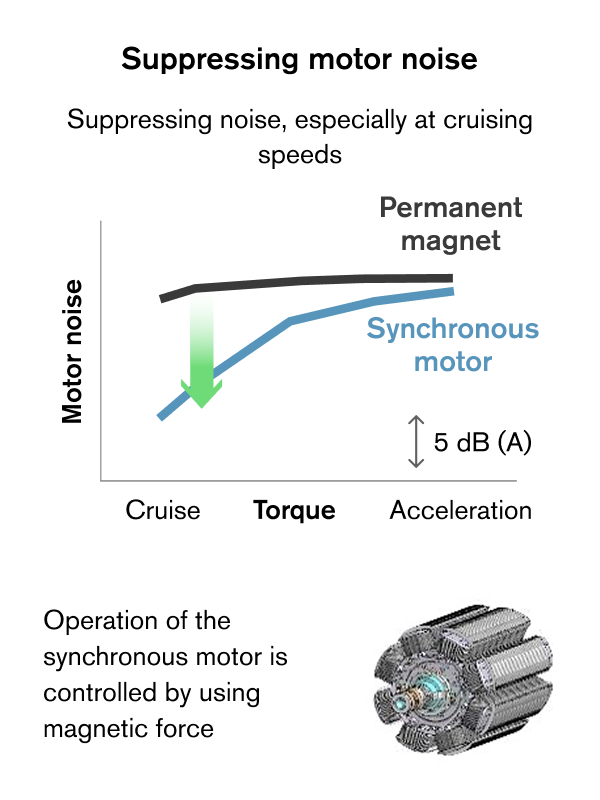
As this motor control technology continues to evolve, it also helps suppress both vibrations and even the slightest noise generated by the gears. The Nissan Ariya uses an Electrically Excited Synchronous Motor (EESM), which controls magnetic force according to driving conditions to reduce noise generated by the motor itself.
Technology configuration
Nissan's advanced motor vibration-control technology enables both high responsiveness and smooth acceleration and deceleration by balancing these competing performance characteristics.
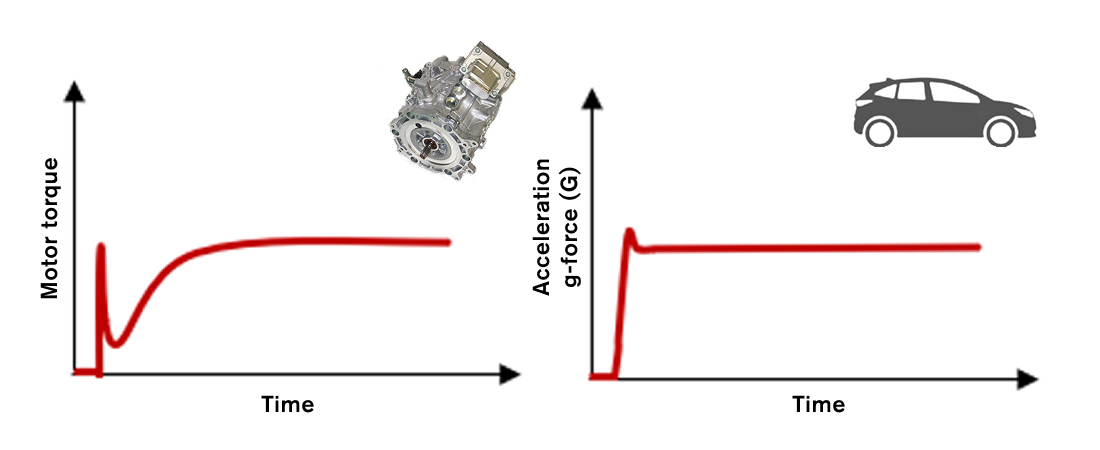
When the motor rapidly generates high torque, the shaft can twist and create vibrations. By anticipating this shaft twist and precisely controlling the motor, the technology suppresses vibrations while delivering immediate, powerful acceleration.
When torque is applied, the drive shaft twists and vibrations can occur.
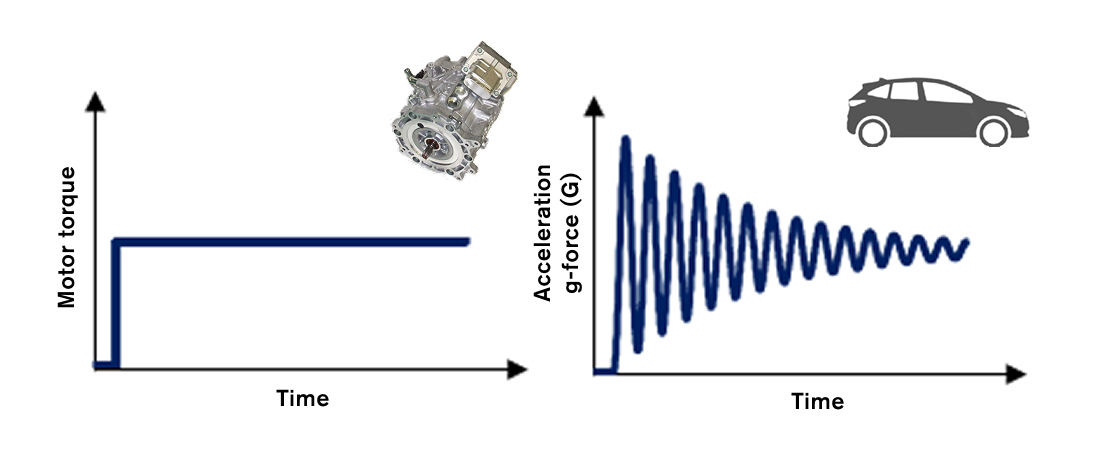
Increasing torque slowly will reduce vibration, but it also delays acceleration.
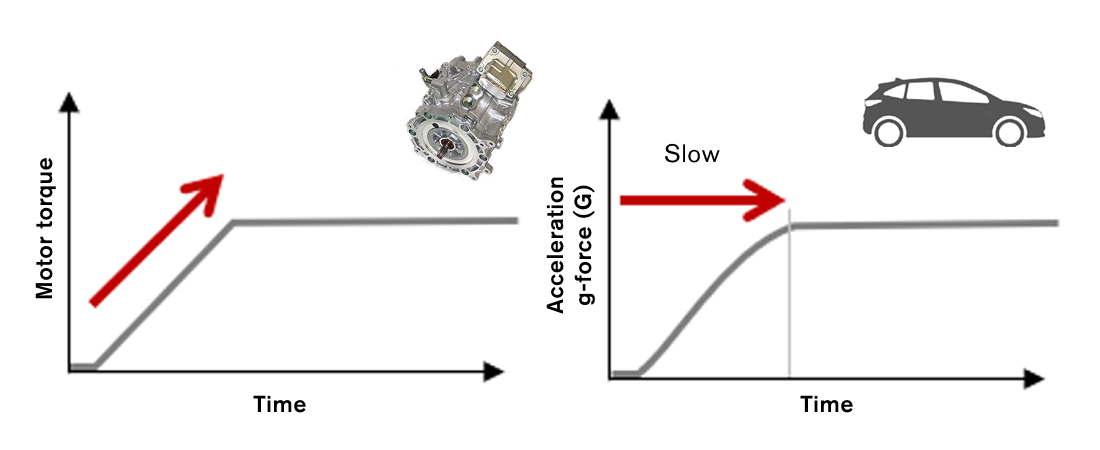
Motor vibration-control technology
Nissan's unique motor vibration-control technology achieves quick and smooth acceleration.
Because there is a small amount of play between the meshing gears, the contact between the gear teeth changes when switching between acceleration and deceleration, causing noise and vibrations.
By anticipating these changes in how the gear teeth make contact and precisely controlling the motor, the technology reduces the resulting noise and vibrations.
Without motor vibration-control technology
A sudden change in how the gear teeth make contact when switching between acceleration and deceleration causes noise and vibrations.
With motor vibration-control technology
The motor is controlled by anticipating changes in how the gear teeth make contact, reducing noise and vibrations.
Related Technology
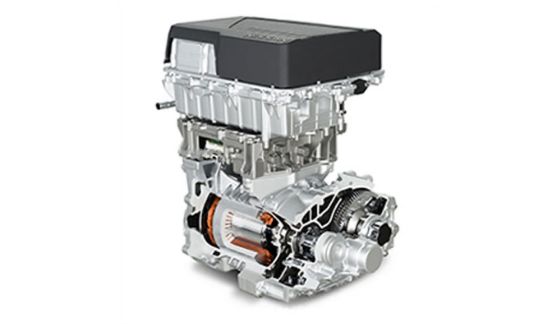
e-Powertrain (ZE1)
Lightweight, compact and high-efficiency powertrain for electric vehicles EVs
e-Pedal
Easy driving using only the accelerator pedal
Lithium-ion Battery for Hybrid Vehicles
Hybrid vehicle battery for improved acceleration and fuel efficiency
e-POWER system
e-POWER delivers a responsive and quiet drive like an EV.

Information Technology to Support the New Values of the EV
This IT system communicates information drivers want to know when driving their Nissan LEAF.