

Advanced Active Noise Control
As of July, 2026


Nissan's unique technology reduces engine and road noise, delivering outstanding cabin quietness
When driving, various sounds enter the cabin, such as engine and road noise. To make cabins quieter, Nissan has pursued a wide range of innovations, from sound-insulating materials to improved body structures. Nissan also pioneered the Active Noise Control System, which uses sound waves to cancel unwanted noise. This technology was first equipped on the Bluebird in 1991 — a world first — and since then, Nissan has advanced this technology. Select models now feature the new High-Performance Active Noise Control, delivering even greater cabin quietness than before.
System operation
Active Noise Control reduces noise that enters the cabin, such as engine and tire noises, by generating a cancelling sound wave — a noise-canceling wave — that eliminates it.
For example, in a noise-canceling headphone, the microphone, speaker and ear sit close together, which makes such control relatively easy. In a car, the speakers and microphones are far from the occupants' ears, and the level and character of the noise differ from seat to seat. The system must also cancel noise while keeping conversation, music and emergency sirens audible. All this demands an extremely sophisticated control.
This enhanced Active Noise Control delivers greater cabin quietness, by reducing engine noise and road noise while leaving necessary sounds intact. It also adds a Zone Control function that concentrates the noise-reduction effect on a specific seating area.
System mechanism
Reducing engine noise and road noise at the same time
Conventional Active Noise Control sets the target frequency based on engine speed, reducing only the dominant engine sound.
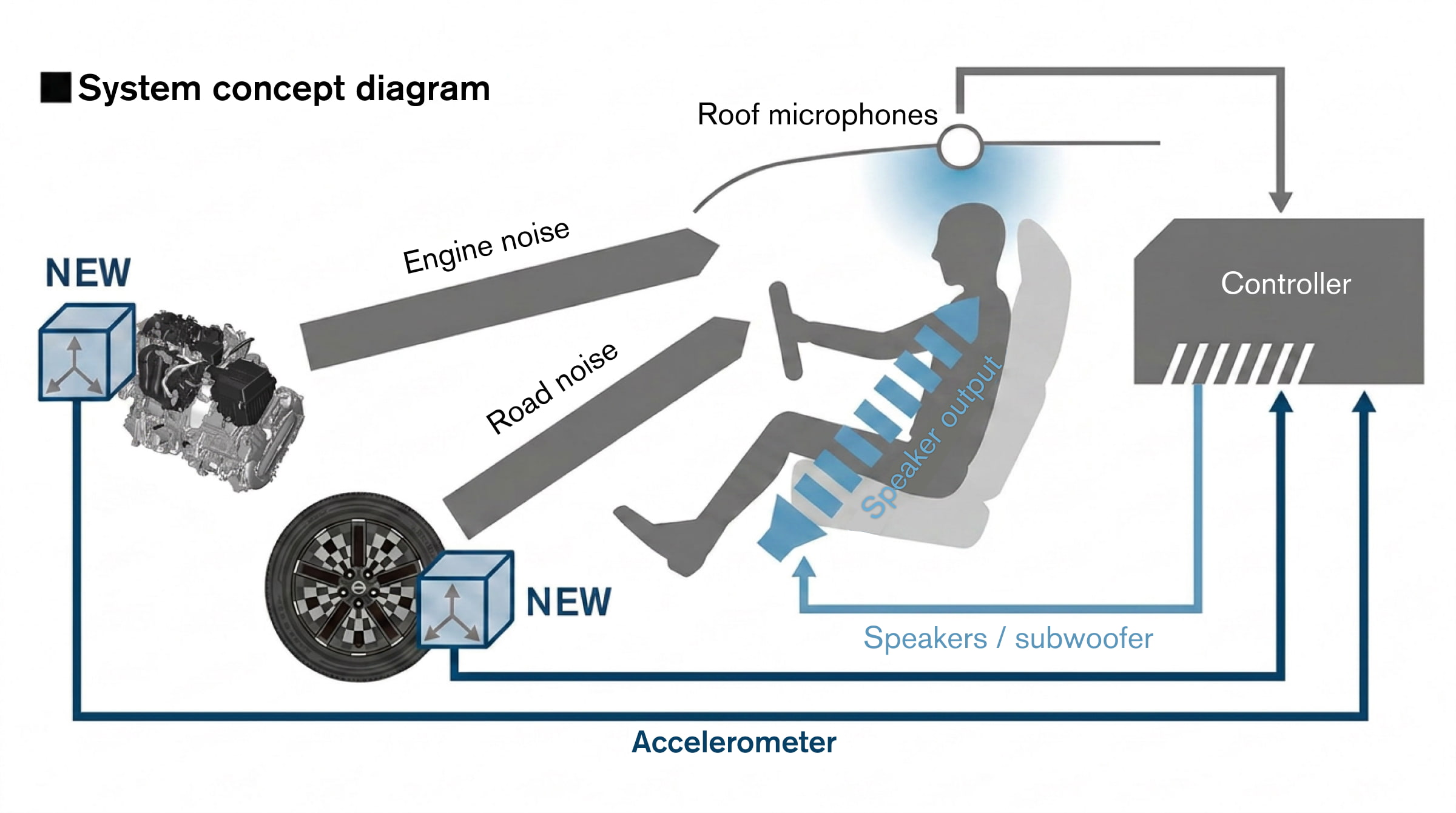
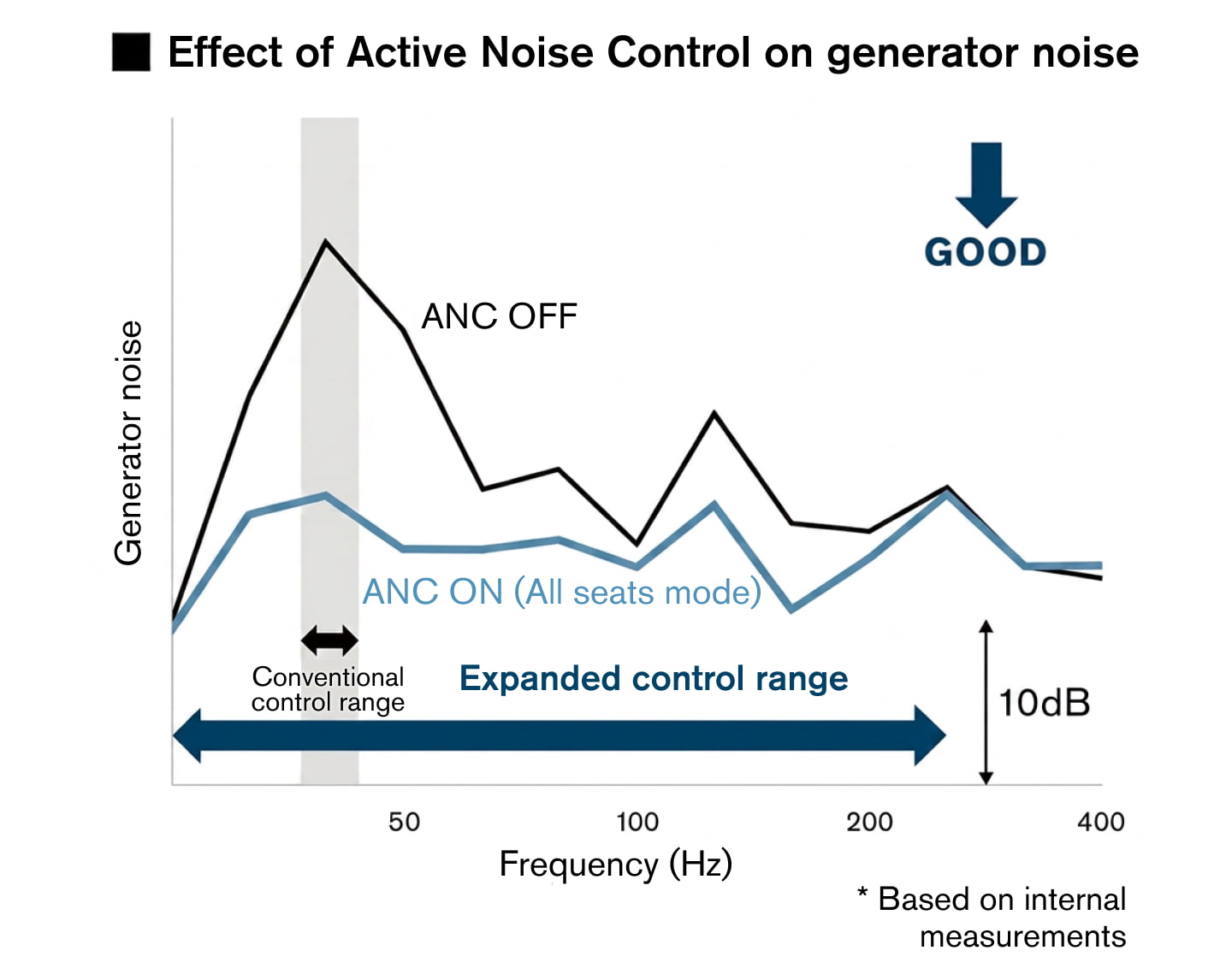
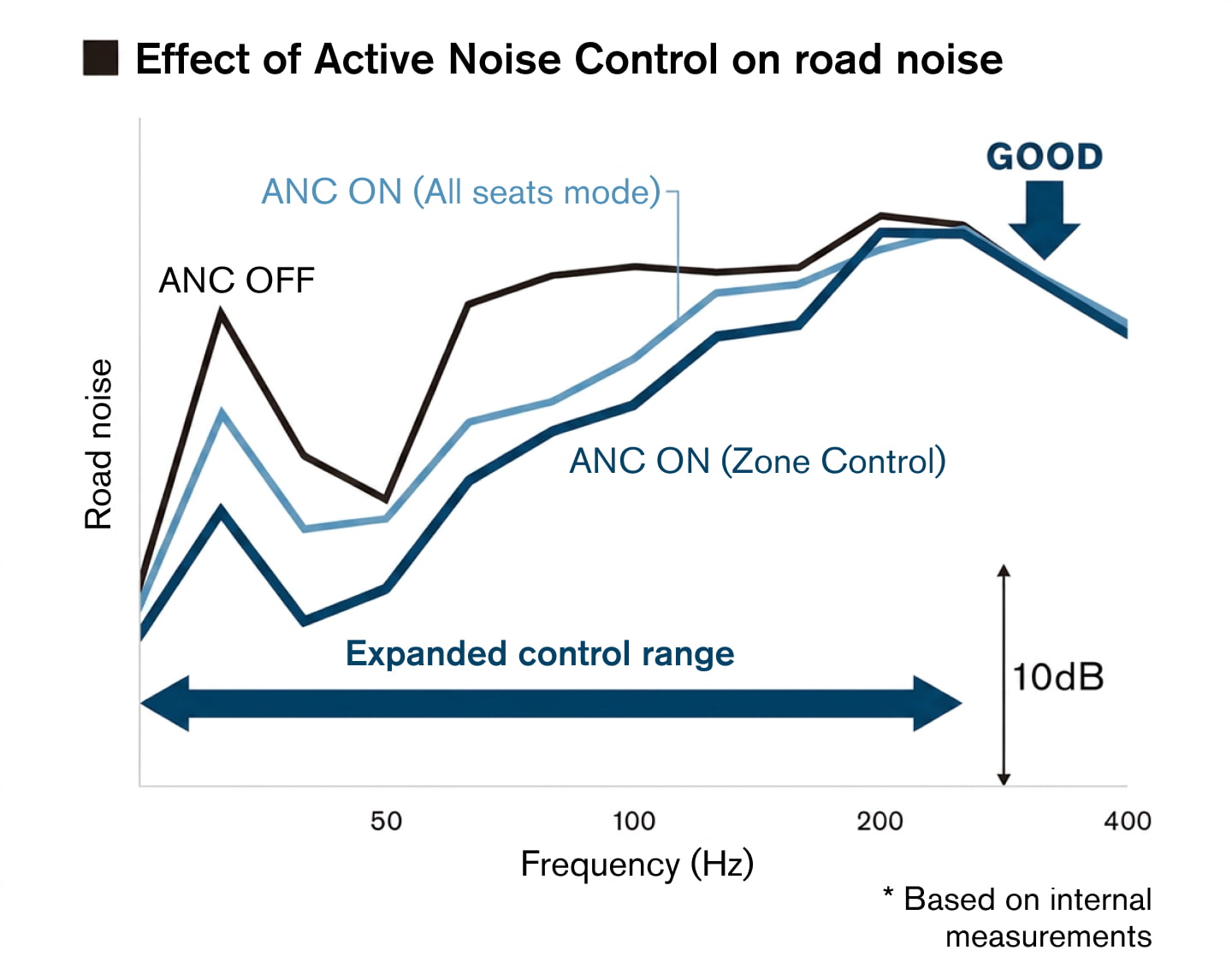
Advanced Active Noise Control places multiple accelerometers near the engine and the tires to measure body vibration. This not only covers engine-related sound over a wider range but also made it possible to target road noise while driving for reduction.
Nissan is the world's first automotive brand to develop a technology capable of simultaneously targeting and reducing both engine noise and road noise.
A controller instantly analyzes the vibration data acquired from the accelerometers together with the sound data picked up by multiple microphones in the cabin, then plays a noise-canceling wave through the speakers to reduce cabin noise. High-performance microphones and a high-performance controller continuously monitor vibration and acoustic signals, keeping the cabin quiet even under constantly changing driving conditions.
Zone Control function
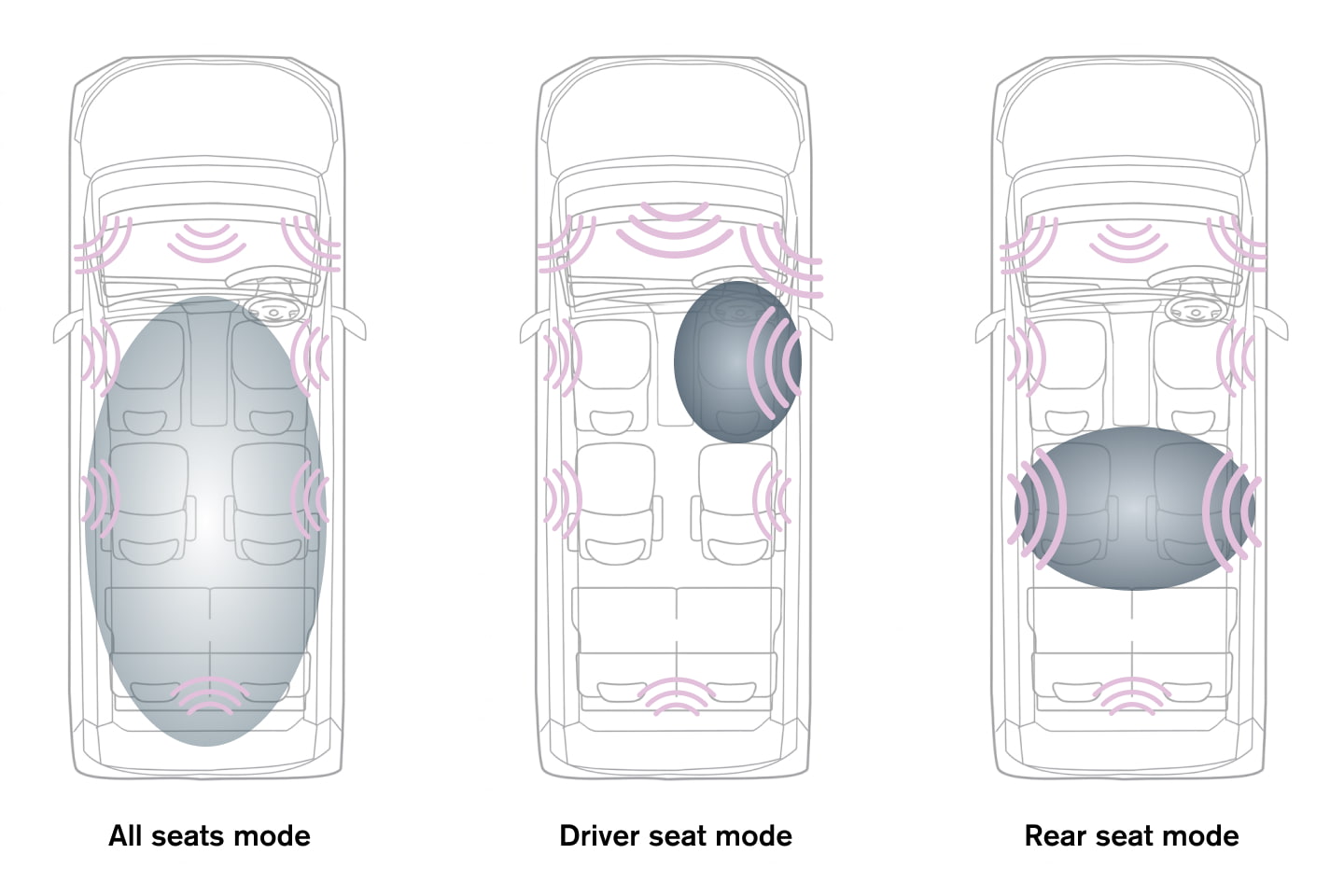
Enhanced Active Noise Control reduces noise evenly throughout the cabin to ensure a uniformly comfortable environment. Its Zone Control function can further raise the noise-reduction effect in a specific area to suit specific situations. In Auto mode, the system automatically detects where occupants are seated and focuses the noise-canceling on their seats. Alternatively, the target area can be set manually, for example, to give priority to rear-seat passengers.
Related Technology
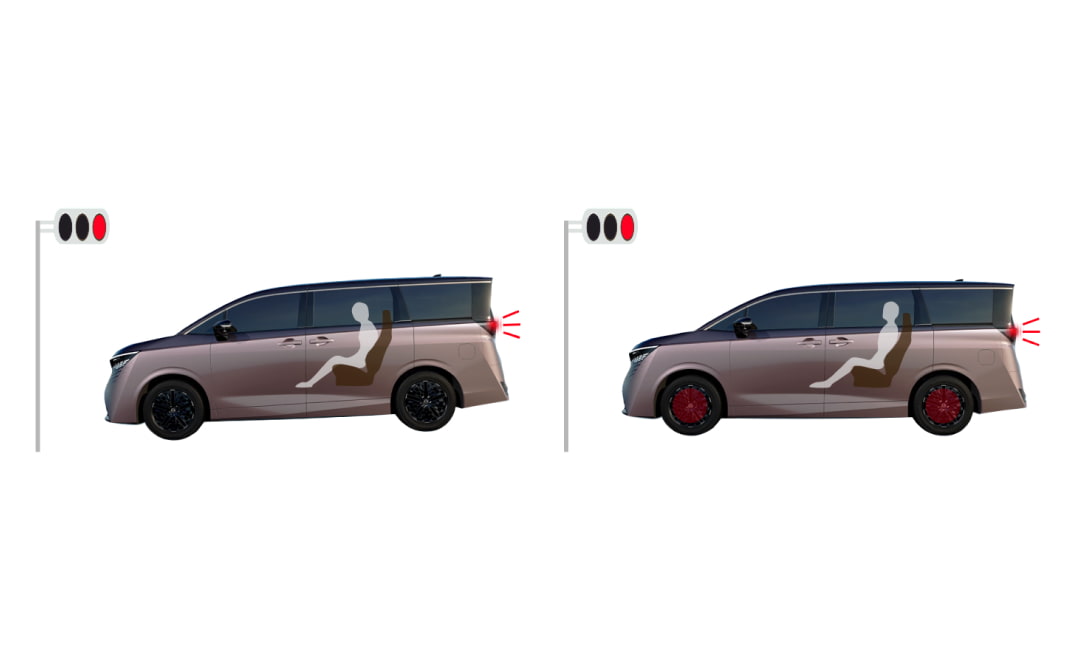
Smooth Stop (vehicle posture control during stopping)
Automatically controls braking in the final moments to ensure a smooth, comfortable stop for everyone on board
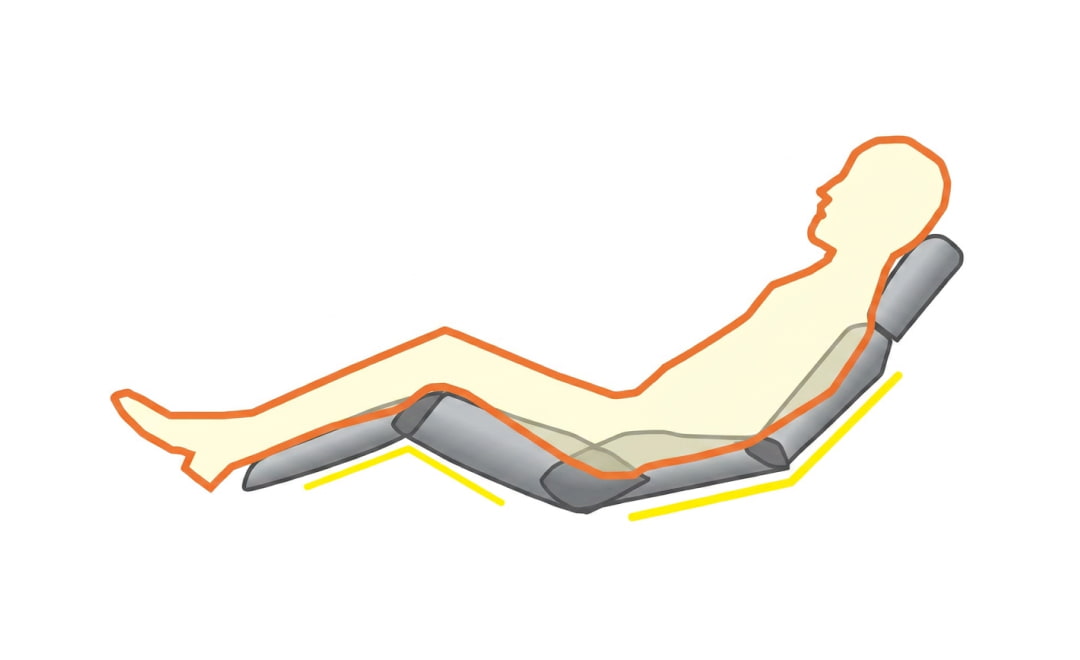
Zero Gravity Seat for second row (dual reclining with ottoman)
An ideal posture inspired by weightlessness makes the cabin even more comfortable