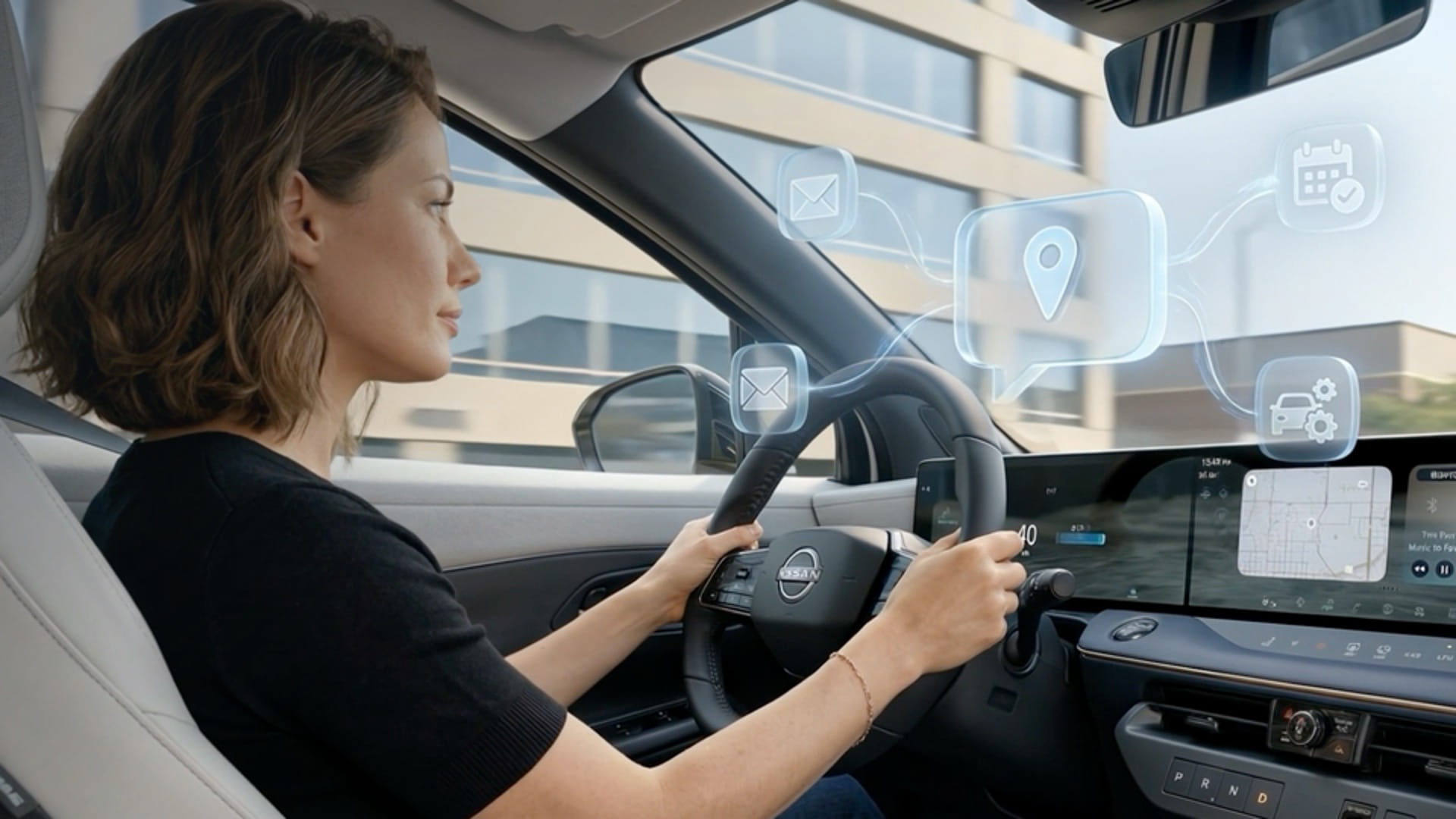

AI-Drive technology
As of June, 2026


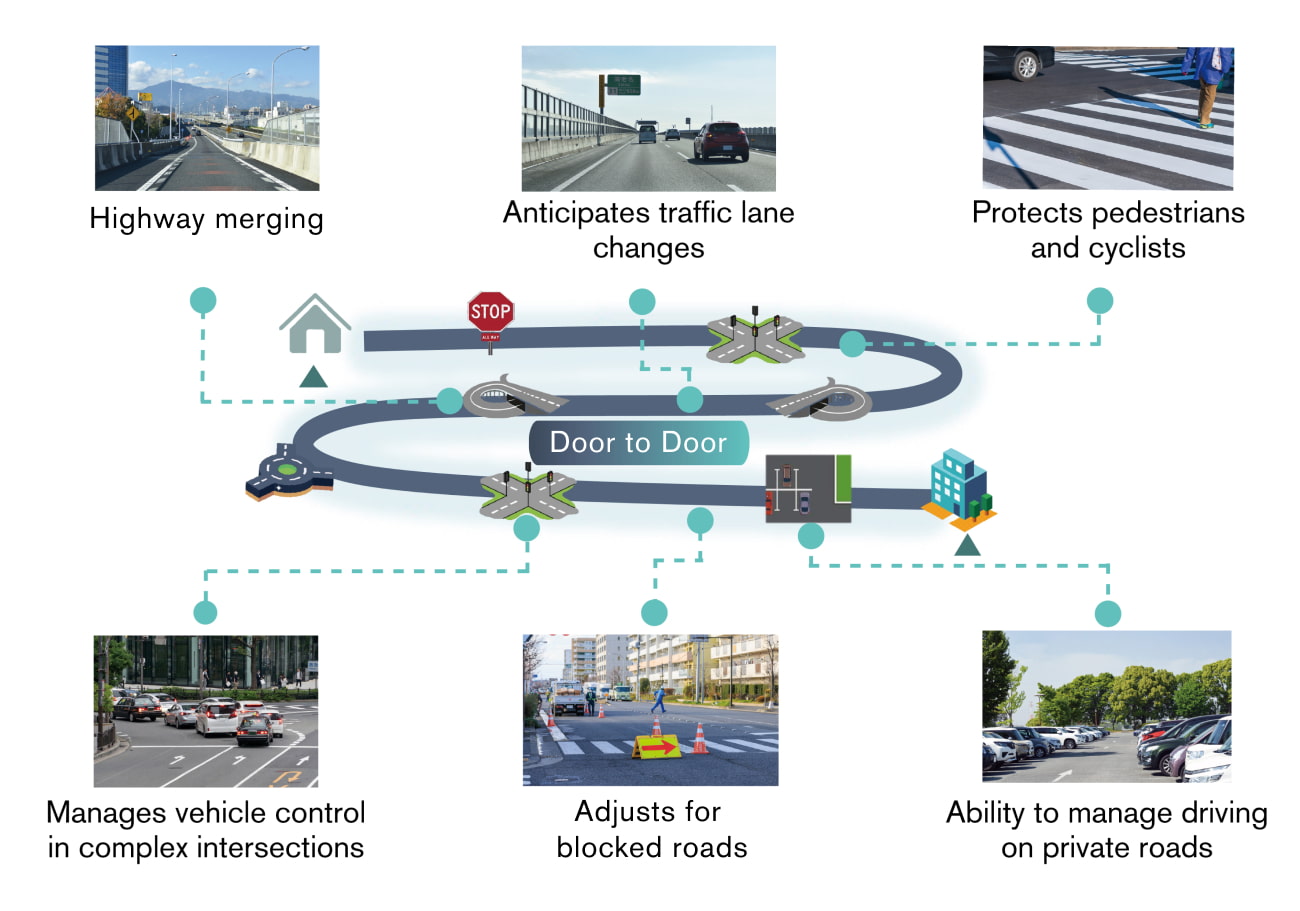
AI-Drive technology delivers door-to-door autonomous driving, including in complex urban environments
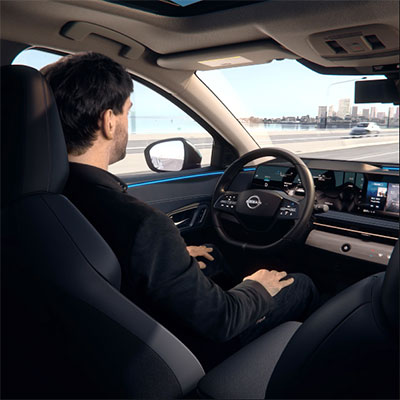
Nissan was among the first to bring advanced driver-assistance systems (ADAS) to market with ProPILOT and ProPILOT 2.0 — highway-capable technologies now deployed across a wide range of models. AI-Drive technology is the next generation of driver assistance, combining the vehicle control and driver-assistance technologies cultivated through those systems with cutting-edge End-to-End AI. It delivers door to door autonomous driving across complex urban environments while enabling safe, reliable driving that flows naturally with surrounding traffic — just as a skilled human driver would.
What the technology does
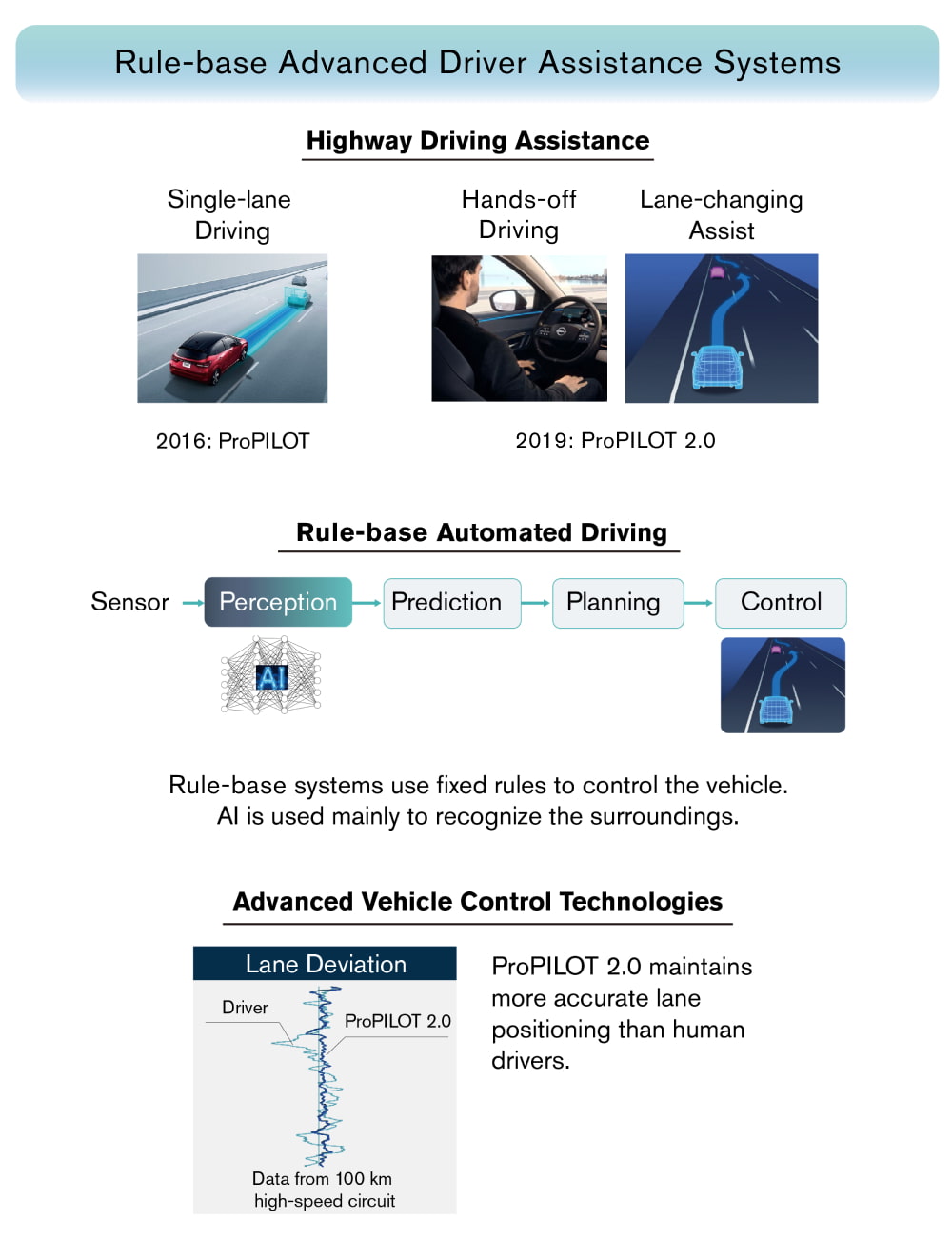
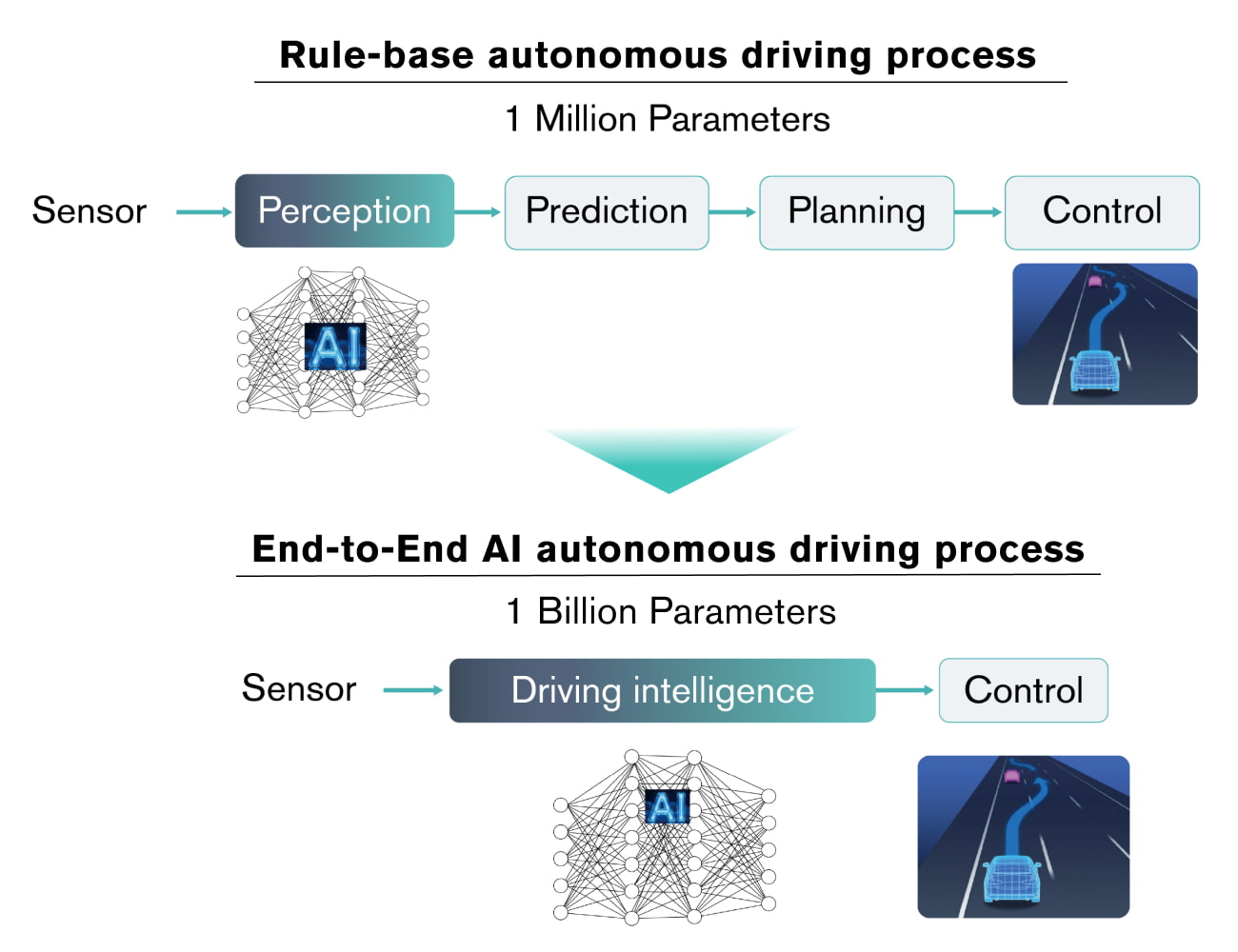
Conventional driver assistance has delivered highway driving support through rule-base autonomous driving process. In that approach, perception, prediction, planning, and vehicle control each followed a defined set of rules, with AI applied only to the perception stage.
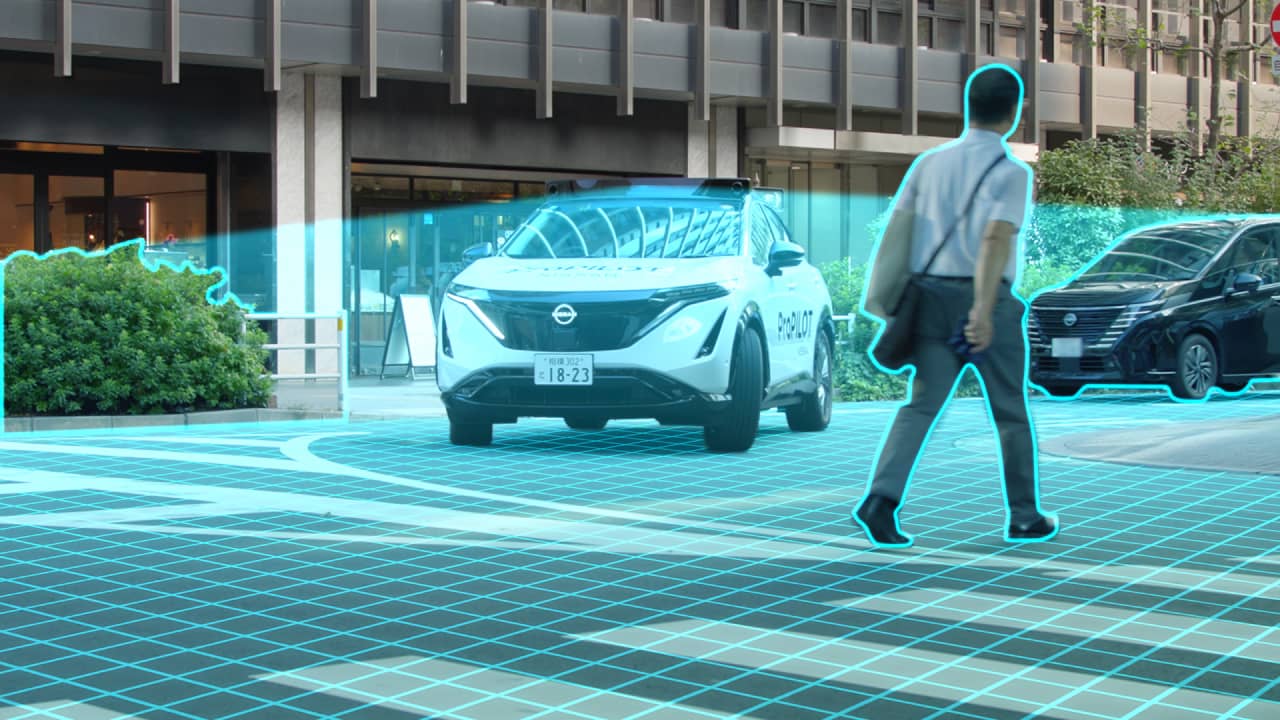
AI-Drive technology takes a different approach. End-to-End AI, capable of learning efficiently and rapidly from vast amounts of data, comprehensively perceives the vehicle's full 360-degree surroundings via onboard sensors, predicts what will happen next and the consequences of its own actions, and handles all driving decisions.
This extends autonomous capability well beyond the highway to general roads, complex intersections, merging traffic and cut-in scenarios that have historically been difficult to automate.
How the technology works
1. End-to-End AI Autonomous Driving
In rule-based autonomous driving, AI was used solely for the perception stage within the sequence of perception, prediction, planning, and vehicle control. End-to-End AI takes a comprehensive approach instead. It grasps all available information in an integrated way, predicts what will happen next and the impact of its own actions, and makes driving decisions accordingly.
Whereas AI used within rule-based systems operates with millions of parameters, End-to-End AI makes driving decisions using billions of parameters.
2. Sensors that perceive the vehicle's full 360-degree surroundings
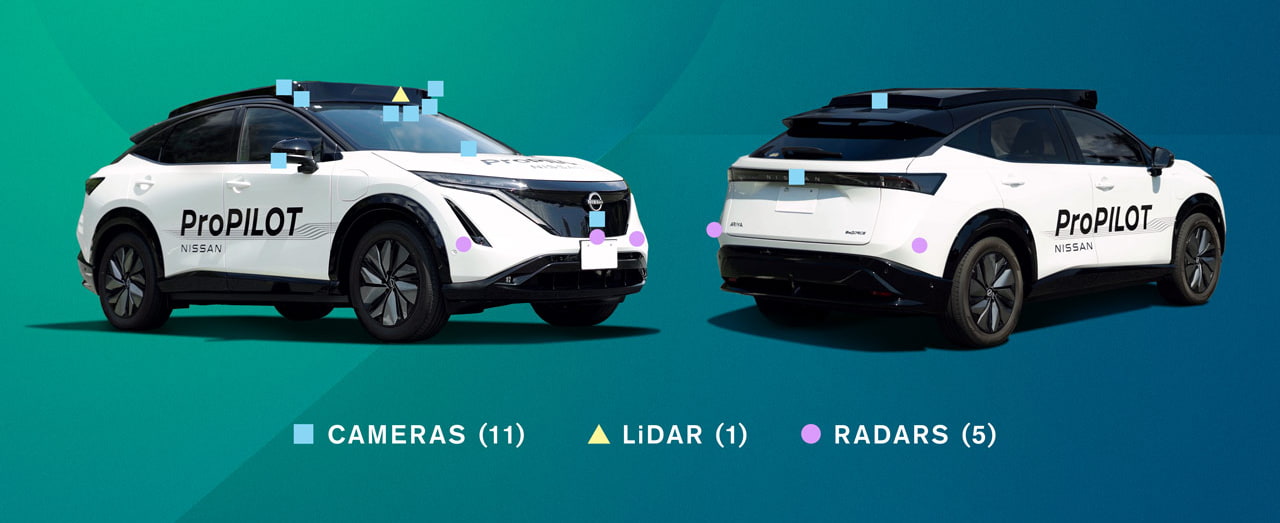
Accurate AI decision-making is only possible with sensing that provides full coverage of the vehicle's surroundings. The next-generation ProPILOT system is equipped with 11 cameras, 5 radar sensors, and 1 LiDAR sensor. Sensor fusion, combining data from each of these sensors, delivers a complete 360-degree view of the vehicle's surroundings.
3. Safe, reliable driving that harmonizes with surrounding traffic
Nissan has long studied the science of offering a sense of “peace of mind” to passengers in the vehicle, analytically examining what makes occupants feel at ease and researching the ride quality that instills confidence. Drawing those insights, the system controls the vehicle to suppress motions that lead passengers to feel uncomfortable. By combining Nissan's electrification technology and vehicle control expertise with End-to-End AI, AI-Drive technology enables driving that is safe, reliable and reassuring for all occupants, as though a skilled human driver were at the wheel.
Related Technology
AI-defined vehicle
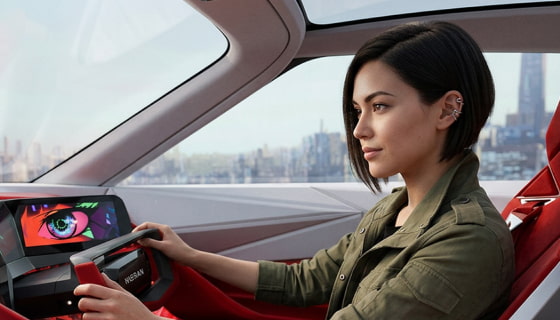
AIDV is a concept in which AI enables the car to perceive and interpret conditions both inside and outside the vehicle, achieving optimal behavior across driving and user experience
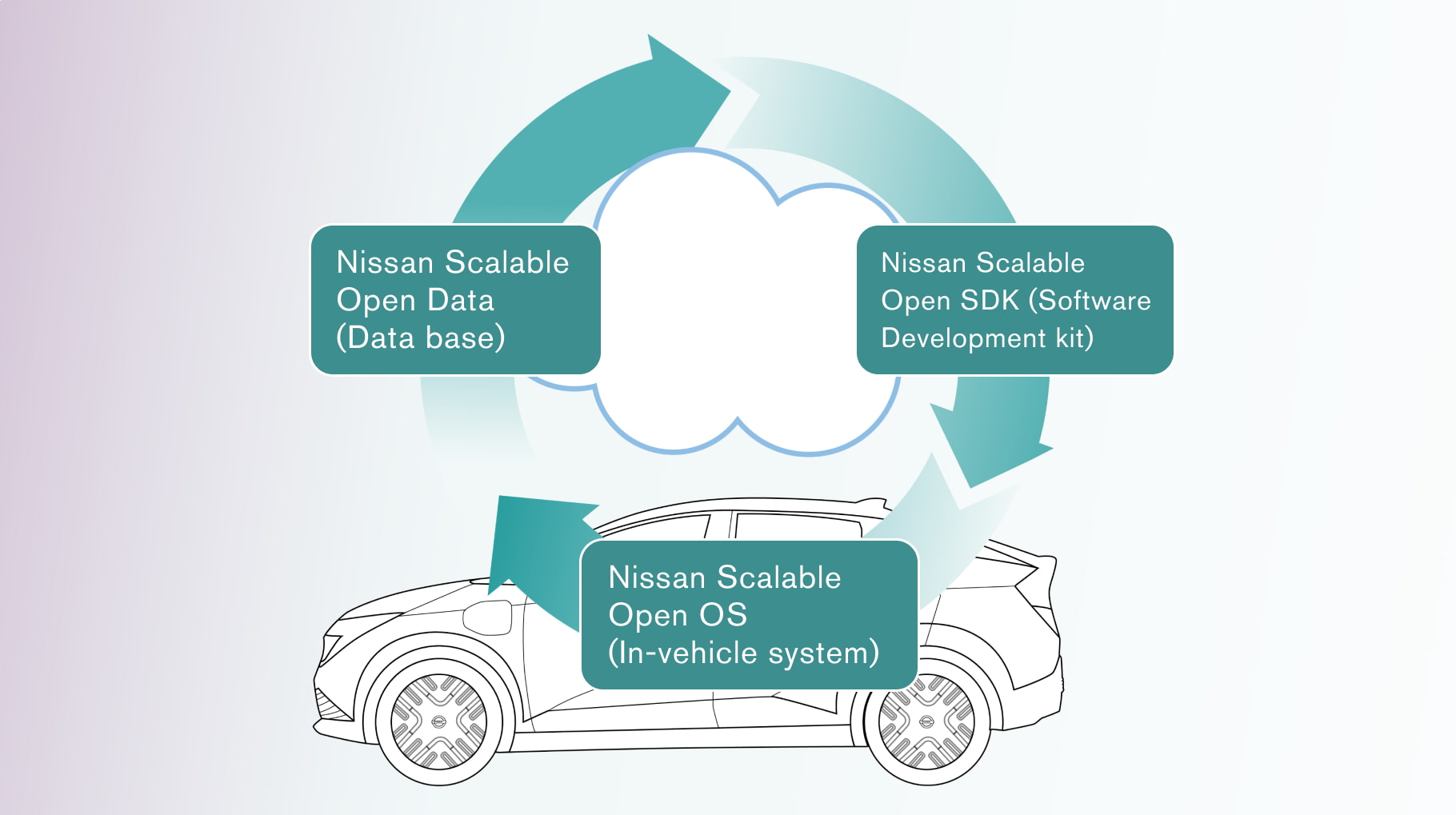
Nissan Scalable Open Software Platform
Nissan's proprietary SDV platform underpins the AI-defined vehicle (AIDV) enabling timely feature updates and the seamless addition of new capabilities